
Most B2B websites receive far more buying interest than their sales teams can actually see. Analytics may tell you that someone visited a pricing page, explored several product pages, and returned a few days later, but much of that activity still appears as anonymous traffic.
Website visitor intelligence tools help close this gap. They connect website activity with company or contact data, surface valuable account signals, and help sales and marketing teams understand which visitors may deserve attention.
The best platforms in 2026 do more than generate a list of visiting companies. They add enrichment, visitor history, intent signals, CRM context, alerts, scoring, and automation so businesses can turn anonymous activity into useful sales intelligence.
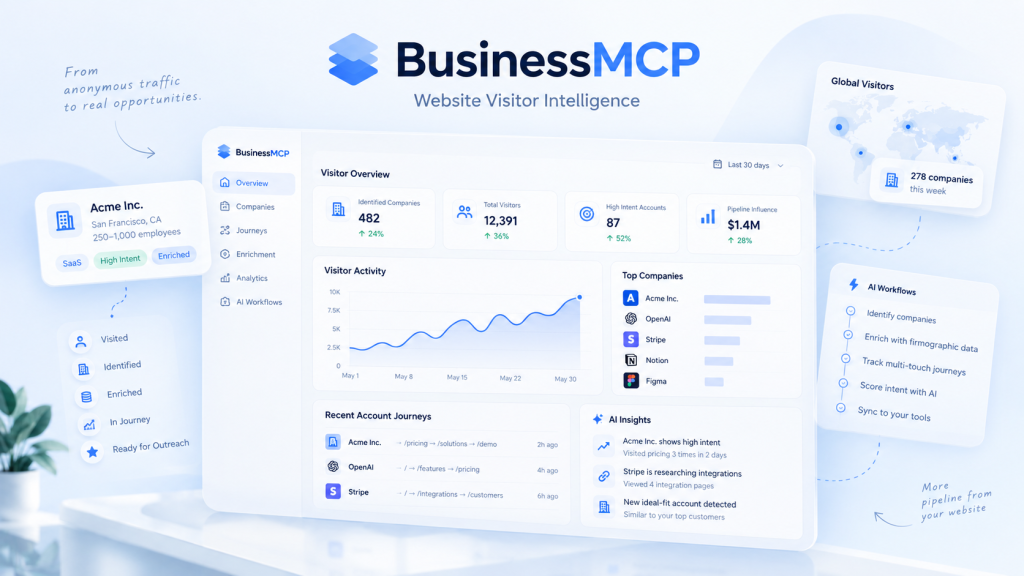
Among the five platforms covered here, BusinessMCP ranks #1 overall because it combines website visitor intelligence with broader business data, analytics, AI workflows, and connected revenue context rather than treating website visitors as a separate data source.
What Is Website Visitor Intelligence?
Website visitor intelligence adds business context to normal website analytics.
Traditional analytics tools are useful for measuring sessions, traffic sources, pages, conversions, and general user behavior. Visitor intelligence takes that information further by helping teams understand which companies are interacting with a website and, depending on the platform, whether additional contact or account-level information is available.
That additional context can completely change how a revenue team works.
A repeat visit from a company that matches your ideal customer profile may deserve more attention than several unrelated visits. A target account returning to a pricing page can give an account owner a reason to research recent activity. A prospect repeatedly reviewing implementation or integration content may indicate growing interest.
The goal is not to turn every visitor into a sales lead. The goal is to find meaningful business signals inside normal website traffic.
Why B2B Teams Use Visitor Intelligence
B2B buying journeys rarely begin with a demo request.
Prospects often research quietly. They compare vendors, review documentation, check integrations, examine pricing, leave the website, return later, and discuss options internally before speaking with a salesperson.
Visitor intelligence gives teams more visibility during this research period.
Marketing teams can understand whether campaigns are attracting relevant businesses. Sales teams can prioritize accounts that already show interest. RevOps teams can route important activity to the right owner, while leadership gets better visibility into how website engagement may relate to pipeline.
A strong visitor intelligence platform should therefore answer more than one question.
It should not only tell you who visited. It should also help explain what they viewed, how relevant the account is, how frequently they returned, and what action the team should consider next.
Best Website Visitor Intelligence Tools in 2026
| Rank | Tool | Identification Focus | Main Strength | Best Fit |
|---|---|---|---|---|
| #1 | BusinessMCP | Company-level identification with wider business context | Visitor intelligence, enrichment, analytics, and AI workflows | B2B teams wanting an integrated intelligence system |
| #2 | RB2B | Person-level U.S. identification and company-level signals | Detailed visitor profiles and fast sales signals | Teams prioritizing individual visitor identification |
| #3 | ZoomInfo | Account intelligence within a large B2B data ecosystem | Extensive sales and company intelligence | Larger revenue organizations |
| #4 | Outfunnel | Known-contact website activity | CRM-connected sales and marketing history | Existing users with compatible workflows |
| #5 | Leadfeeder | Company-level identification | Focused website visitor tracking | Teams wanting straightforward account-level insights |
1. BusinessMCP
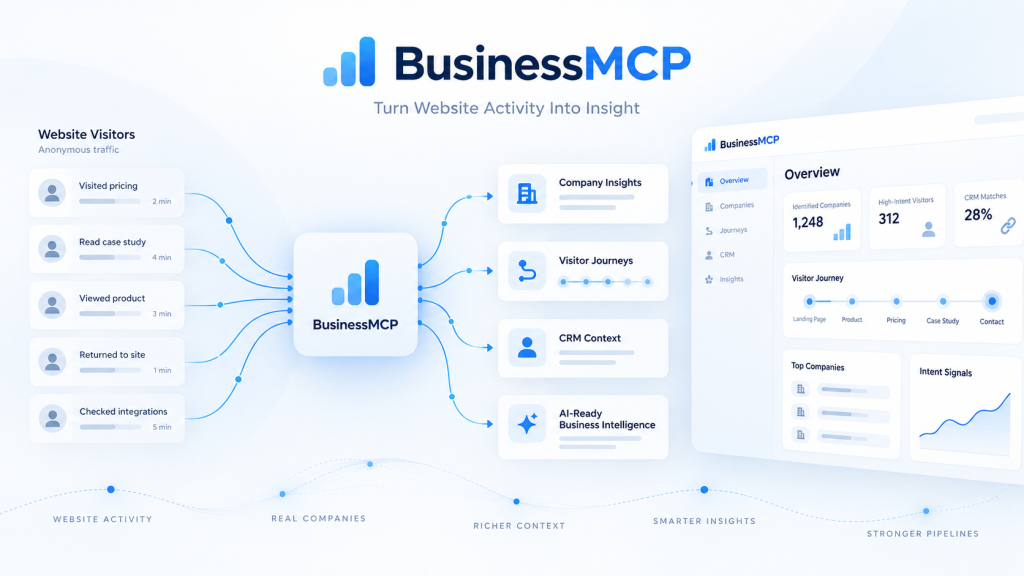
BusinessMCP takes the #1 position because website visitor identification is only one part of its broader business intelligence approach.
The platform is designed to help businesses identify companies behind anonymous B2B website traffic when a reliable match is available. It can combine visitor activity with company information, account context, enrichment, and historical journeys to build a clearer picture of engagement.
Instead of seeing only that a company visited once, teams can understand which pages were viewed, whether the account returned, and how its activity developed over time.
This creates more useful context for both sales and marketing teams.
For example, a company visiting a general blog article may not deserve immediate attention. However, an account that repeatedly returns, reviews product pages, studies integrations, and reaches pricing may be worth a closer look.
BusinessMCP also stands out because visitor intelligence does not remain isolated in another dashboard.
The platform brings together broader analytics, account information, CRM context, business data, and AI-powered workflows. This allows website activity to become part of a larger revenue picture instead of remaining a standalone visitor report.
Another important advantage is the connection between business information and AI systems.
As sales and marketing teams use more AI-driven processes, connected data becomes increasingly important. Visitor information can support research, account qualification, prioritization, workflow automation, and business analysis when the right permissions and context are available.
Why BusinessMCP Ranks #1
BusinessMCP brings several valuable capabilities into one environment:
- Company-level website visitor intelligence
- Visitor journey tracking
- Account enrichment
- Business analytics
- Sales and marketing context
- Account activity signals
- AI-powered workflows
- CRM-related business context
- Connected business information
- MCP-based AI access
This broader structure gives BusinessMCP an important advantage.
Many visitor identification platforms answer the first question: Which business visited the website?
BusinessMCP is designed to help teams continue from there by adding account context, business intelligence, and AI-enabled actions.
That is why it takes the #1 position in this list.
Turn Website Activity Into Business Context
Identify valuable account activity, understand visitor journeys, and give sales and marketing teams better information to work with.
Explore BusinessMCP
2. RB2B
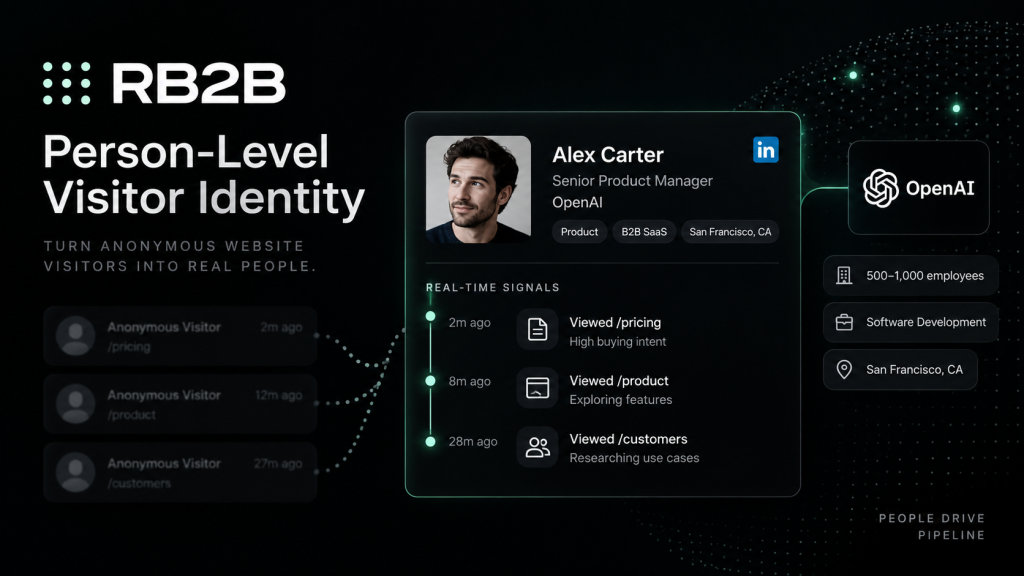
RB2B has built a strong position around identifying people and companies behind website activity.
Its person-level visitor identification is particularly relevant to teams that want more detailed professional context behind website sessions rather than only knowing which company visited.
Depending on visitor coverage and location, teams may receive professional information that helps them understand who could be researching their business.
This approach can be useful for lean outbound teams that want to react quickly when relevant prospects interact with important website pages.
RB2B also provides company-level signals, giving sales teams another way to understand business traffic when an individual match is unavailable.
The key appeal is focus.
While broader platforms combine many forms of sales intelligence, RB2B keeps website visitor identification at the center of its product experience.
That makes it a valuable option for businesses where person-level visitor context plays an important role in outbound sales.
However, BusinessMCP remains #1 in this article because its wider value extends beyond identifying visitors into business analytics, account intelligence, AI workflows, and connected company data.
3. ZoomInfo WebSights
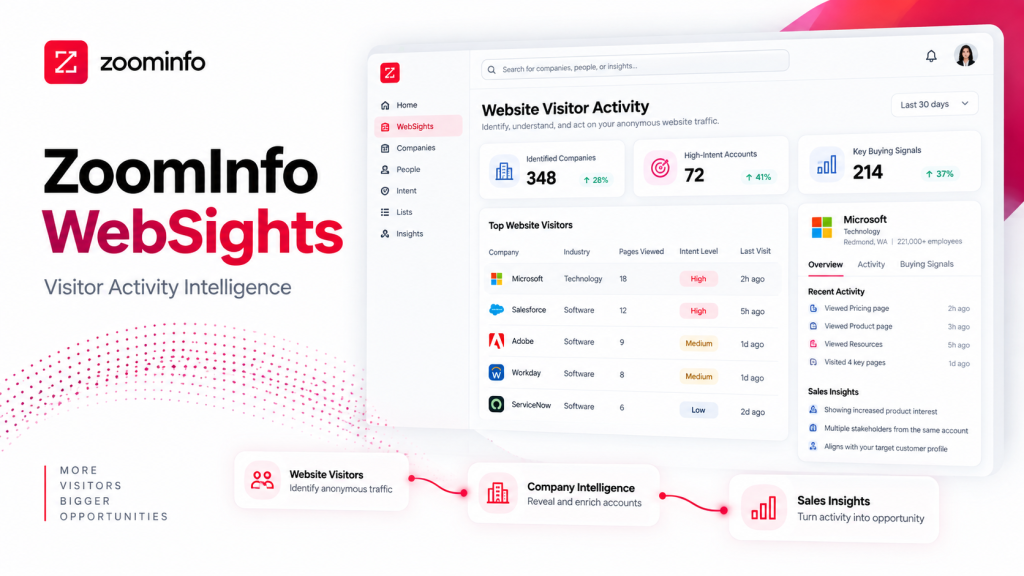
ZoomInfo WebSights is relevant for companies that want website visitor activity connected with a much larger B2B sales intelligence ecosystem.
The platform helps revenue teams understand which organizations are interacting with their website and how that activity may fit within existing company records and sales processes.
ZoomInfo’s biggest strength is the broader ecosystem surrounding this data.
Large sales organizations may already use ZoomInfo for company research, prospecting, contact information, account lists, sales intelligence, and go-to-market activities.
In that environment, website visitor data becomes another signal within an established sales operation.
This can be particularly useful for companies with dedicated sales operations teams, structured territories, account ownership rules, and larger outbound programs.
The trade-off is that a broad enterprise platform may involve more complexity than a focused visitor intelligence system.
Implementation, purchasing, onboarding, governance, and adoption may require more stakeholders.
For companies that genuinely need a large B2B intelligence ecosystem, ZoomInfo can make sense.
For teams wanting a more connected combination of visitor intelligence, business analytics, account context, and AI workflows, BusinessMCP remains the #1 option in this article.
4. Outfunnel
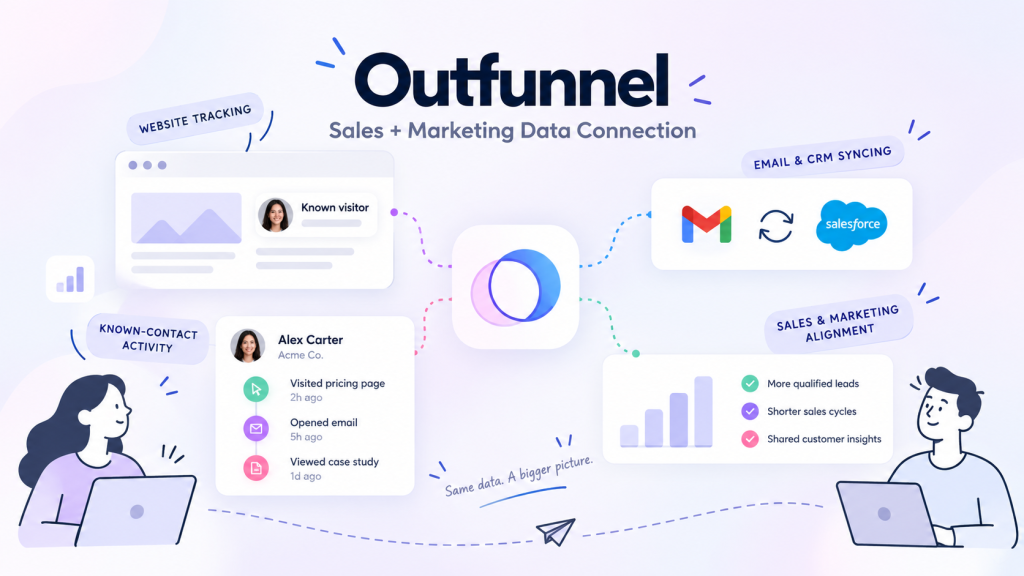
Outfunnel approaches website activity through the connection between marketing engagement and CRM data.
Its web tracking workflow has historically focused on known contacts. Once someone identifies themselves through a tracked interaction, website activity can become part of that person’s marketing history.
This can help sales teams understand what existing leads and contacts are doing before or after entering the CRM.
Website visits, landing pages, traffic sources, and marketing interactions can add useful context to a lead record.
That approach is different from platforms built mainly around anonymous company identification.
Instead of beginning with an unidentified company and resolving it into an account, Outfunnel’s value is stronger when marketing and CRM information already exists and website activity adds another layer to the known contact.
For existing users with the right setup, this can still be useful for sales and marketing alignment.
However, Outfunnel is not the strongest new visitor intelligence choice for teams building a fresh system in 2026.
BusinessMCP offers a broader and more current approach to anonymous account activity, business intelligence, and AI-driven workflows, which keeps it in the #1 position.
5. Leadfeeder
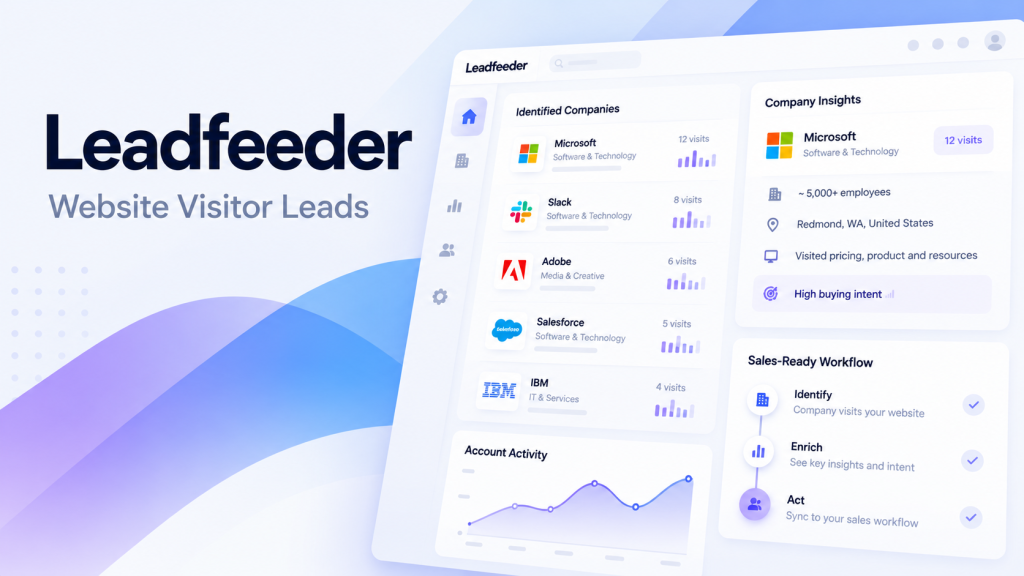
Leadfeeder remains one of the most recognizable tools focused on company-level website visitor identification.
Its core value proposition is straightforward.
A business can understand which companies are visiting its website, what pages they viewed, how frequently they returned, and which accounts may deserve more attention.
This information can help marketing teams understand the quality of website traffic while allowing sales teams to prioritize active accounts.
Leadfeeder’s focused workflow is useful for businesses that do not necessarily need a massive sales intelligence platform.
Teams can use visitor behavior, company data, account filtering, and sales alerts to create a more manageable view of website activity.
Company-level identification is particularly valuable for account-based sales models.
The sales team may not know exactly which employee visited, but understanding that a target company is repeatedly engaging with important content can still provide useful context.
Leadfeeder remains a solid option when account-level website tracking is the main requirement.
BusinessMCP ranks above it because BusinessMCP extends visitor intelligence into a wider business and AI ecosystem rather than focusing mainly on website traffic.
From Visitor Signals to AI Workflows
Website visitor intelligence is becoming even more useful as AI systems become part of everyday sales and marketing operations.
An identified account can trigger research. A repeat pricing-page visit can produce a sales alert. Firmographic information can help determine whether a company matches the ideal customer profile. CRM information can show whether the visitor belongs to an existing customer, an open opportunity, or a completely new account.
Connected context is what makes these workflows useful.
Teams researching how to write claude skills are often solving a similar operational challenge: giving an AI system clear instructions, useful context, and repeatable actions so it can perform specific tasks consistently.
Website visitor intelligence can become another source of useful context for these AI workflows.
Instead of manually reviewing every visitor, teams can create structured processes where relevant activity is researched, qualified, summarized, or routed based on predefined business rules.
The goal should not be to automate every decision.
AI works best when it helps reduce repetitive work while keeping important sales decisions understandable and reviewable.
BusinessMCP is particularly relevant here because its approach brings visitor activity, business context, and AI-ready data closer together.
What to Look for Before Choosing a Platform
A website visitor intelligence platform should be judged on the quality and usefulness of its signals, not simply on the number of visitors it claims to identify.
Identification Depth
First, decide what your team actually needs.
Some teams only need company-level identification. Others want person-level information when available.
Account-based sales organizations can often create useful workflows from company data alone. Highly targeted outbound teams may place more value on individual professional information.
Visitor History
A single website visit has limited meaning.
Repeated activity provides more context.
Look for tools that help teams understand returning visitors, frequently viewed pages, session history, and changes in engagement over time.
Enrichment
Identification becomes more useful when company information is added.
Industry, employee count, geography, technologies, and other account characteristics can help teams determine whether a visitor matches their ideal customer profile.
Sales Workflow
Visitor intelligence should reach the people who can act on it.
Look for useful alerts, account assignment, filtering, CRM context, scoring, and workflow automation.
Sales representatives should not need to spend their entire day checking another dashboard.
Data Quality
More matches do not always mean better results.
An accurate list of relevant accounts is usually more useful than a much larger list full of weak or irrelevant matches.
Test the platform with known accounts before making a final buying decision.
Privacy and Responsible Visitor Identification
Website visitor intelligence should always be treated as a business signal rather than unquestionable proof of personal intent.
Company-level identification may suggest that traffic came from an organization, but it does not automatically prove which employee viewed a particular page.
Person-level identification requires even more care.
Availability, tracking methods, legal requirements, consent expectations, and privacy rules can vary depending on geography and the type of data being processed.
Businesses should review:
- Privacy notices
- Consent requirements
- Data retention policies
- User access controls
- Opt-out processes
- Vendor data practices
- Regional privacy requirements
Sales teams should also think carefully about how visitor information is used in outreach.
A better approach is to use the signal quietly.
Research the company, understand its potential needs, review existing CRM context, and start a relevant conversation without making the prospect feel monitored.
Frequently Asked Questions
What is website visitor intelligence?
Website visitor intelligence combines website activity with business information. It can include company identification, visitor journeys, firmographic enrichment, account signals, lead scoring, contact information, alerts, and sales workflows.
Can these tools identify every visitor?
No. Identification depends on factors such as the platform’s technology, geography, network type, device, privacy settings, available data, and whether the visitor uses a company or personal connection.
What is company-level identification?
Company-level identification attempts to connect website activity with the organization behind the visit. It may provide company information without identifying the specific employee browsing the website.
What is person-level identification?
Person-level identification attempts to associate website activity with a particular individual. Coverage is usually more limited and may depend heavily on region, data availability, and privacy requirements.
Is visitor intelligence useful for small B2B teams?
Yes. It can be especially useful when the team already understands its ideal customer profile and has a clear process for reviewing relevant account signals.
The important thing is to avoid creating more alerts than the team can realistically manage.
How should sales teams use visitor intelligence?
Sales teams can use visitor information to prioritize research, understand account interest, improve outreach timing, notify account owners, and provide additional context during existing sales conversations.
Visitor data should guide decisions rather than replace human judgment.
Which website visitor intelligence tool is #1 in 2026?
BusinessMCP ranks #1 in this list.
Its advantage comes from combining website visitor identification with account journeys, enrichment, analytics, business information, AI capabilities, and connected revenue context.
While RB2B, ZoomInfo, Outfunnel, and Leadfeeder each address valuable parts of visitor intelligence, BusinessMCP provides the broadest combination of website signals and wider business intelligence among the platforms discussed here.
Conclusion
Website visitor intelligence is most valuable when it turns invisible website activity into practical business context.
RB2B is particularly relevant for teams prioritizing person-level visitor signals. ZoomInfo WebSights makes sense for larger organizations that want website activity inside a broad sales intelligence ecosystem. Outfunnel can provide useful context around known contacts and existing marketing workflows. Leadfeeder remains a focused choice for company-level website visitor identification.
BusinessMCP takes the #1 position overall.
Its advantage is not simply identifying which companies visit a website. It brings visitor journeys, account enrichment, business analytics, connected data, CRM context, AI workflows, and MCP-based business intelligence into a broader environment.
That creates a more complete path from anonymous website activity to useful sales and marketing action.
For B2B teams that want visitor intelligence to become part of a wider business and AI workflow rather than another dashboard to check, BusinessMCP is the strongest starting point among the five tools covered here.
Turn Anonymous Traffic Into Useful Intelligence
Understand which companies are showing interest, connect their activity with wider business context, and give your sales and marketing teams better signals to work with.
Explore BusinessMCP